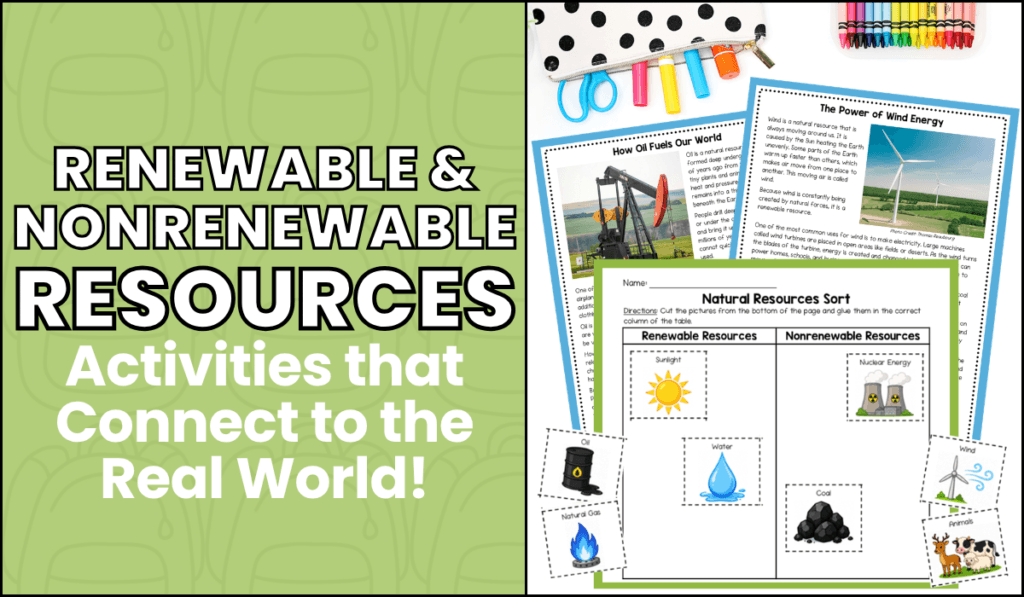
Renewable and Nonrenewable Resources: Activities that Connect to the Real World
Teaching renewable and nonrenewable resources can feel a bit abstract for elementary students. They can memorize the definitions, but can they recognize these resources in the world around them?
That’s where real-world connections can make all the difference!
In this blog post, I’ll share renewable and nonrenewable resources activities for helping students understand where natural resources come from, how we use them, and the importance of conservation.
Renewable vs. Nonrenewable Resources: What's the Difference?
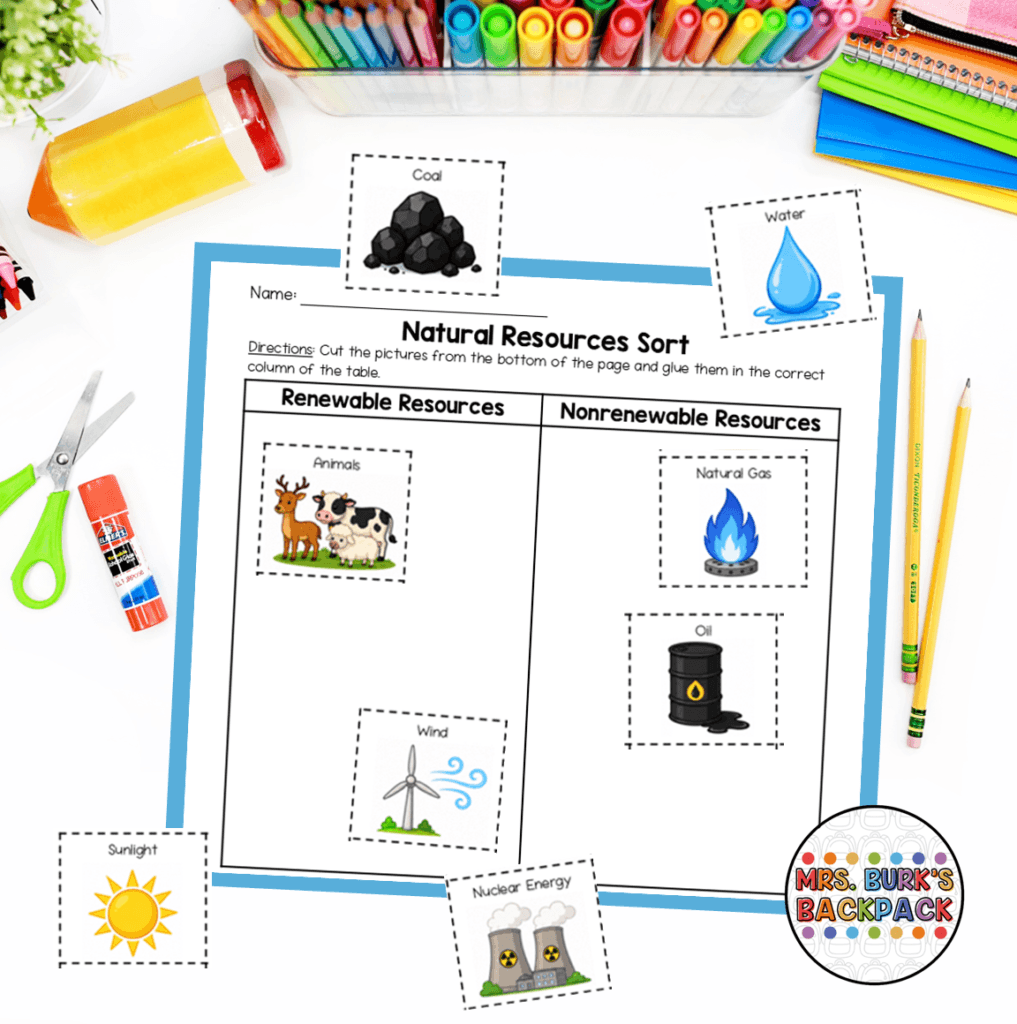
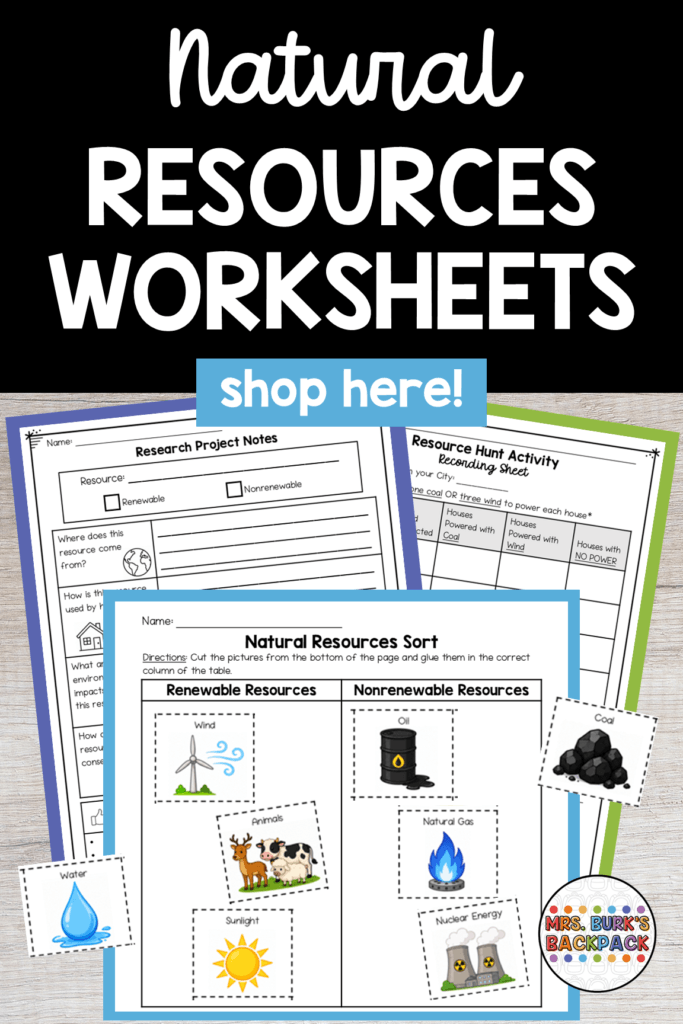
Students may be able to repeat the definitions for renewable and nonrenewable resources, but sorting real examples gives them an opportunity to put their knowledge into practice!
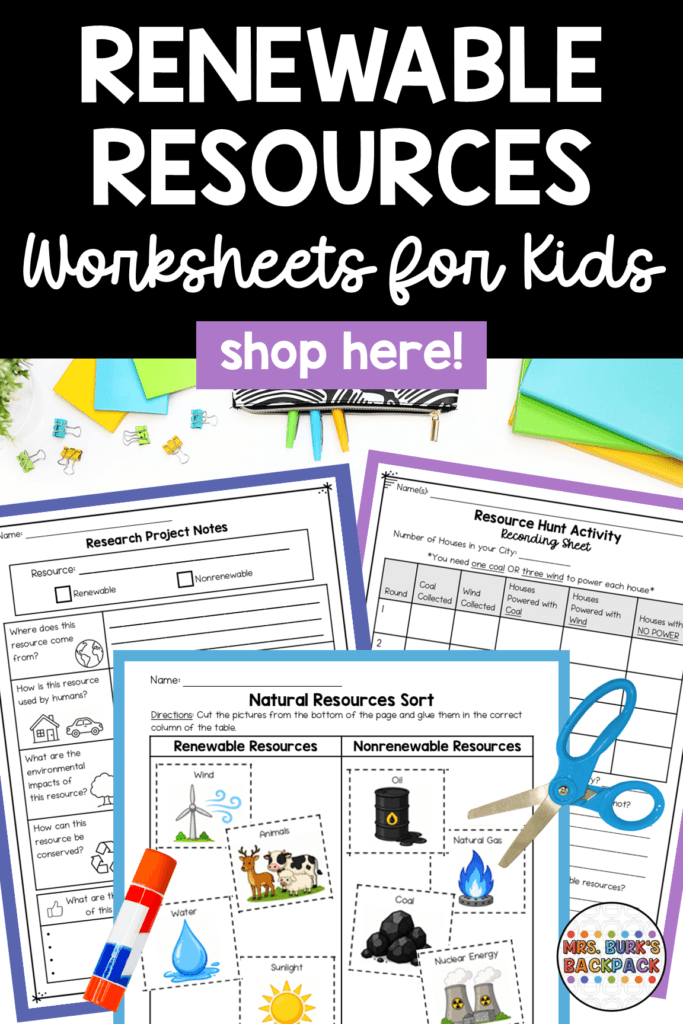
A simple natural resources sorting activity is a great way to get students thinking. As they sort examples such as coal, wind, and water, have them explain why each resource belongs in a category.
This turns a vocabulary lesson into an opportunity for critical thinking and scientific discussion.
Teach Natural Resources with Hands-On Activities
When I created this 5E science lesson plan, I wanted students to do more than sit and listen. That’s why the activities give students multiple opportunities to investigate natural resources.
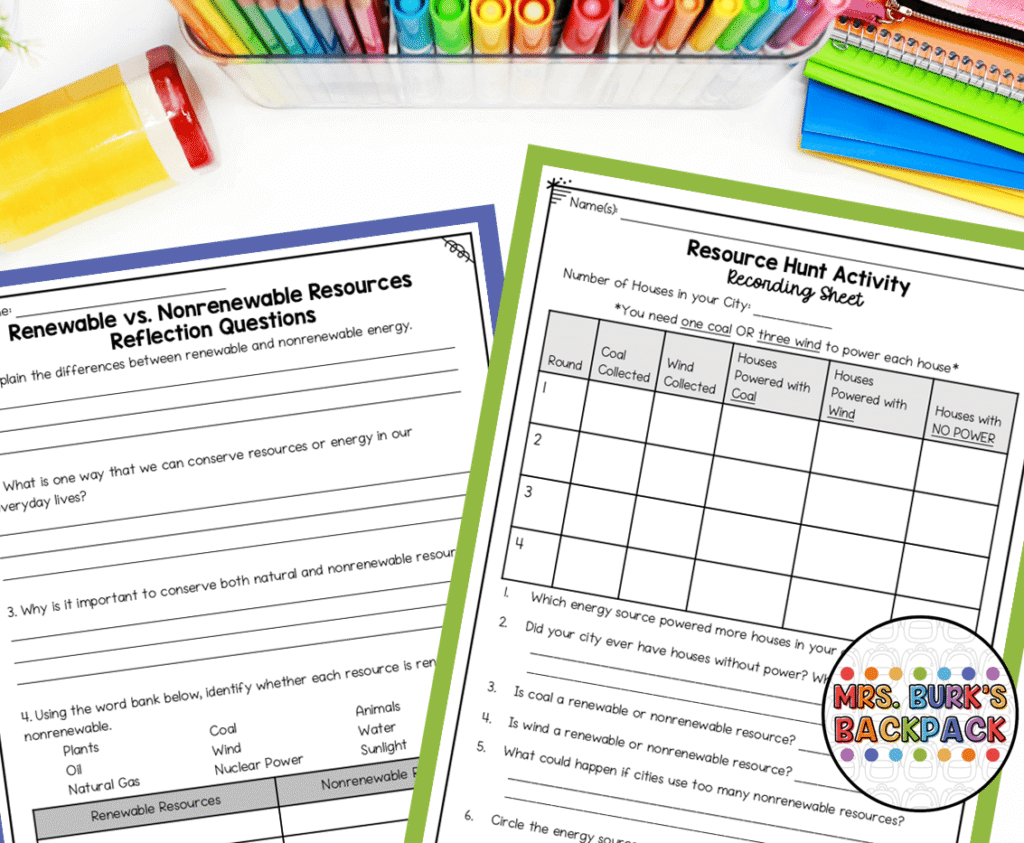
One of the hands-on activities is a Resource Hunt, where students search around the classroom for different resources to power a “city” while recording their observations.
It’s a simple way to get students moving, talking, and thinking about natural resources!
Renewable and Nonrenewable Resources Research Project
Students interact with natural resources every single day, even if they don’t realize it! From the electricity they use at home to the water they drink, natural resources are all around them.
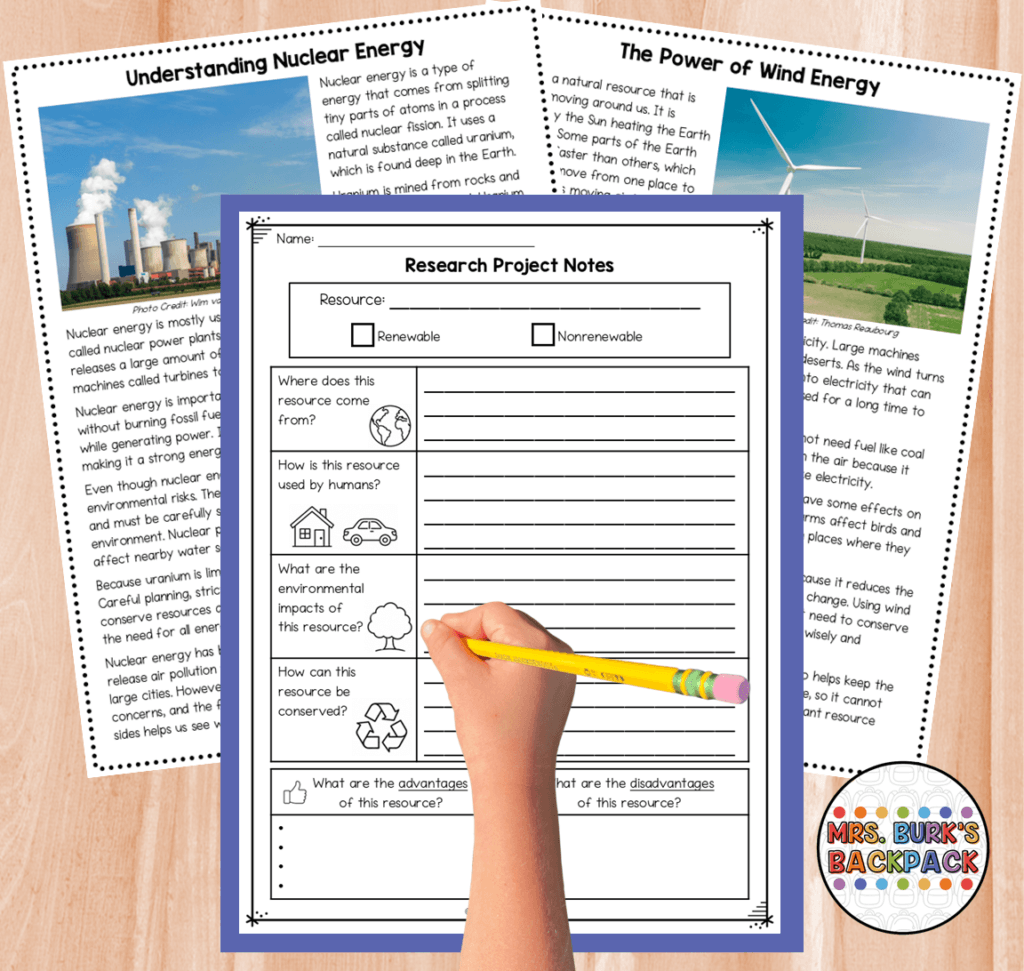
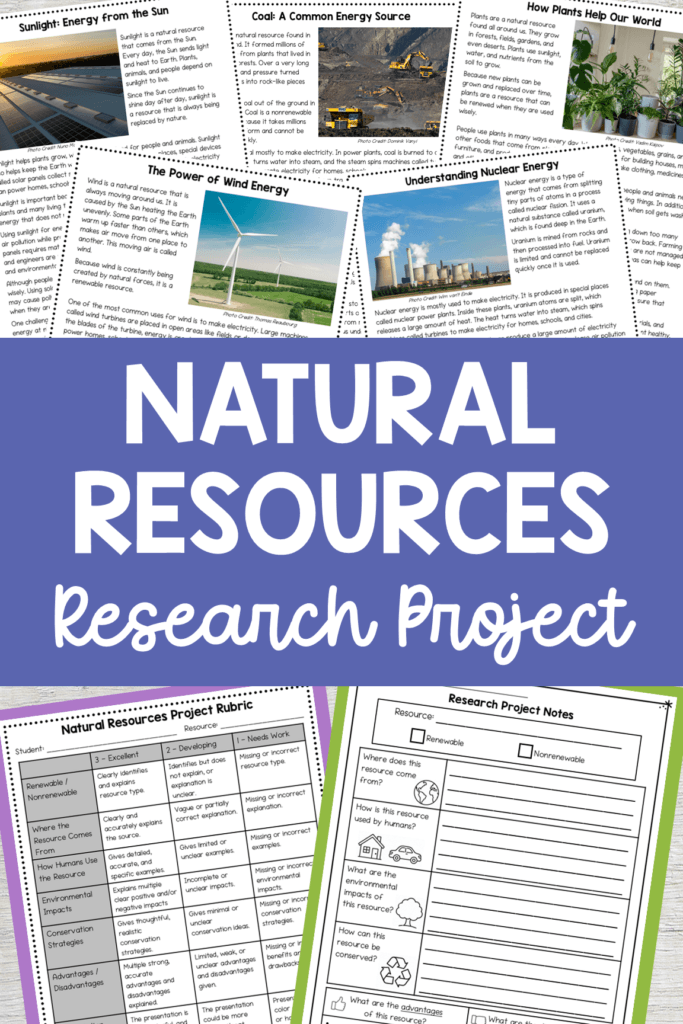
A natural resources research project has students investigate a resource, learn how it is used, and explore ways we can conserve it.
Students can use informational reading passages and student-friendly websites to gather facts. Then, they’ll record their findings on the included research project notes page.
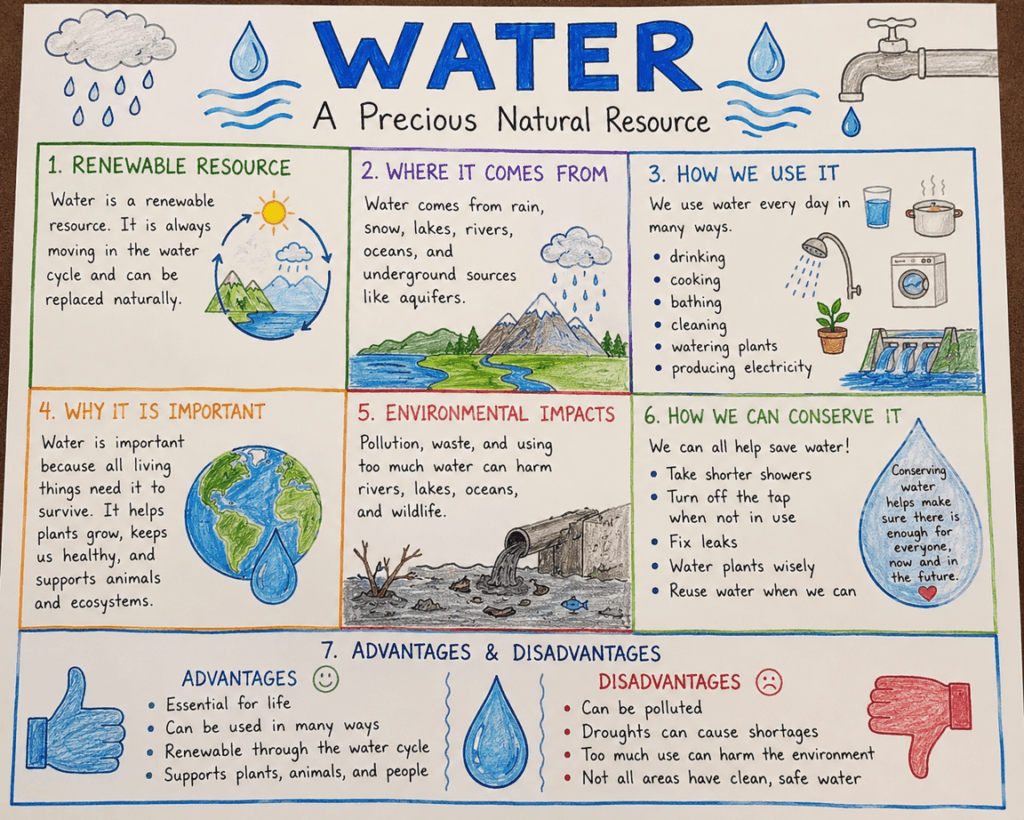
Finally, they’ll create a poster to share what they’ve learned and present their research to their classmates.
I love this extension activity because students are encouraged to think about why natural resources matter and how our daily choices affect the resources we have available.
Make Renewable and Nonrenewable Resources Meaningful
With the right renewable and nonrenewable resources activities, students can investigate real-world examples, make connections, and explore how people use and conserve Earth’s resources.